

make it blue
A BUTCHER'S #75
A BUTCHER’S hook/look (Cockney rhyming slang)
I thought the blue, no blue in issue #66 chromatic void, needed a follow up - of more blue. So, to continue…
clear blue
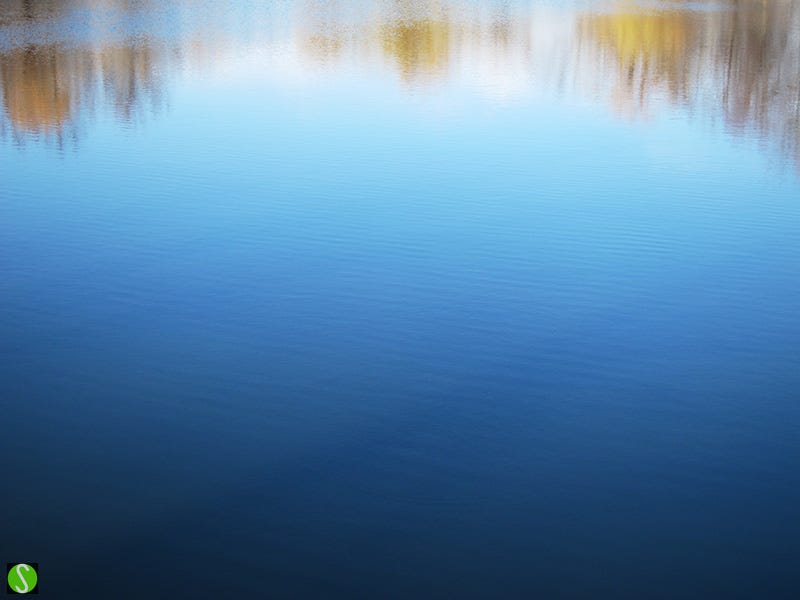
I was searching for a suitable introduction photo for this issue when I came across this one from 2012 of a lake upstate. This is it, ‘as was’ - no cleaning up, no filters, no tweaking - just doesn’t seem real.
them old blues
Some notes on blues from way back... How does a mystery stay completely unsolved for 2,000 years? From the 8th century until 2008, how the ancient Mayan people created their blue was one of those mysteries. A unique bright turquoise paint that is durable, resistant to everything, even modern chemical solvents. A super-blue! And no one could figure out how it was made.
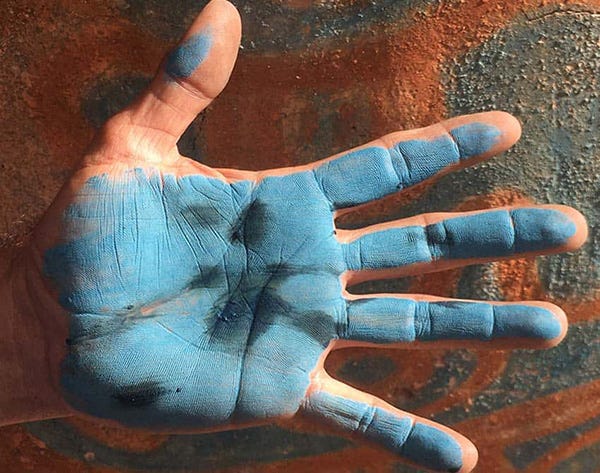
What’s impressive is that, after stumping researchers for centuries, it was an indigenous sculptor, Luis May Ku that cracked the formula in 2023 in his home lab in the Yucatan. He managed to recreate one of the earliest known examples of advanced organic / inorganic chemistry: the ancient Maya process of extracting blue paint from leaves and stems from the añil plant via a chemical reaction.
International
Yves Klein got the idea for creating his own color, International Klein Blue (IKB), when lying on a beach in Nice, looking up at the clear blue Mediterranean sky. He wanted that feeling of a dazzling ‘absolute’ blue.
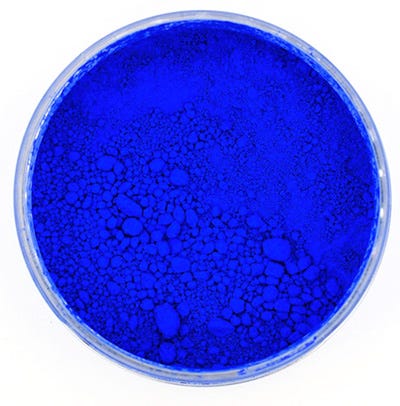
Edouard Adam, whose paint shop is still in Montparnasse, created the pigment by using a different binder with the ultramarine blue pigment (the usual rabbit skin glue dulled the vibrancy)
bleu, mais oui
national identity
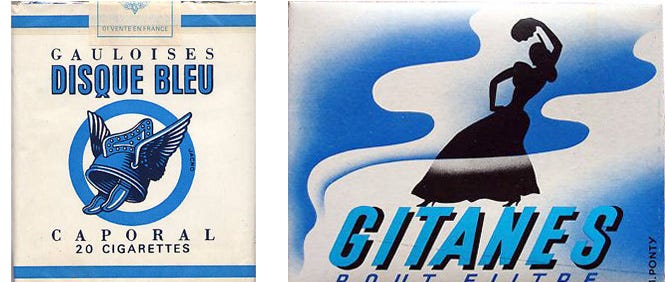
Alongside Gitanes and Gauloises Disque Bleu cigarettes as such identifiers of being French, there’s Bugatti blue, or French ‘Alpine’ racing team colors which I knew from seeing Renault Gordinis around. La vie en bleu.

pict(ure) this lot
While Mayan blue was sacred, mystical, and reserved exclusively for the gods or those chosen for ritual sacrifice, over in Scotland, blue dye was made from a different plant, woad. And it was put to a different use.
Tattooed and stained blue, the Picts in Scotland were a pretty ferocious bunch, according to Julius Caesar had ‘a wild look in battle’. The dye was woad and made from the locally growing plant leaves, which also happened to be medicinal for their wounds.
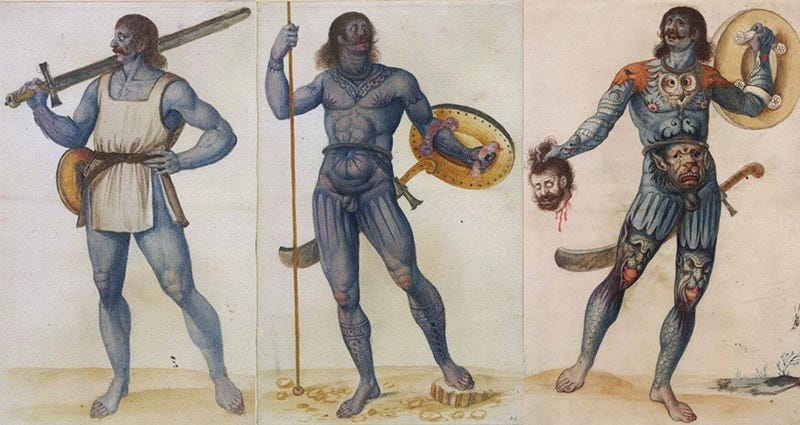
I mean, look at that guy’s tats (not to mention his hand held accessory). This lot coming at you would have been scary as hell - no wonder the Romans gave up dealing with them and built a wall. Hang on a minute… up against armored Roman Legionaries they may be fierce but they’re also starkers, in Scotland!
blue wash
Another spectacular postcard from the pile - there’s nothing like a wash of blue to transform a black & white photo to color.
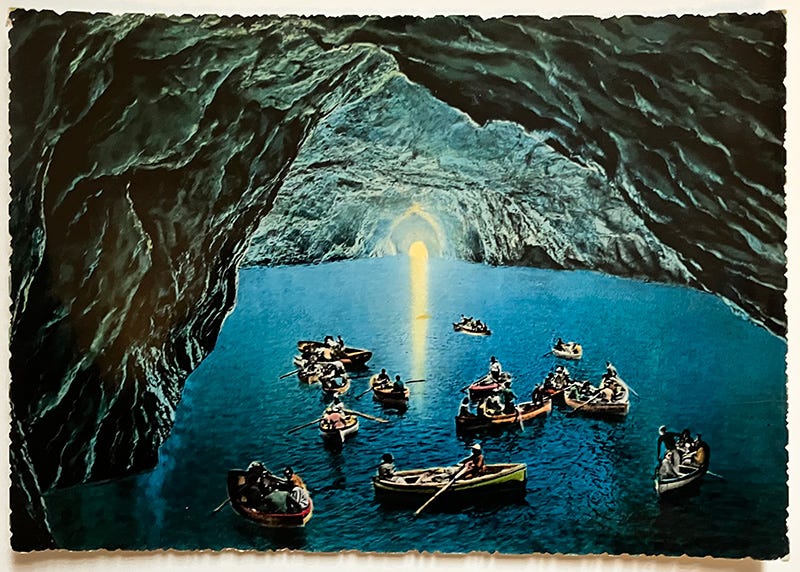
In Italian, on the back in very neat handwriting - ‘During the high tide, the mouth of the cave closes. The sea is reflected on the rocks and diffuses a blue light’.

Great post this week, as usual.
You wear your knowledge lightly, which is fantastic! Love your interest in people woven into the tales of colour and design. Delightful reading. Thanks.
Great post Steve!
Are you familiar with the Bleu de Lectoure ( Pastel of Lectoure) ?
www.bleu-de-Lectoure .com
Woad (Isatis tinctoria) also known as pastel, is an indigo plant that was well-known to the Greeks and Romans at the beginning of our era. It was then widely cultivated in Europe during the Middle Ages and until the mid-19th century. Today, these indigo plants are widely used by many cultures around the world for their medicinal properties. The discovery of the chemical dye and synthetic blue proved fatal for all indigo-bearing plants. This color is all around us, in the sky, the water, and also in our homes, in a whole range of shades. This woad plant, completely forgotten in Europe for decades, nevertheless has many benefits. Besides its blue color, which brings us a feeling of softness and well-being when it comes into contact with our skin, it protects us from fungal infections and itching. We must therefore seek new techniques to develop its production in order to bring us beauty and health. We will explain all this to you: the production of woad leaves and seeds, as well as the extraction of the pigment and the natural dyeing process. Passionate about this blue, we continue the work of the old master dyers using indigo, a 100% natural dye, just like in the heyday of woad. Today, the company is located at 15 Avenue de la Gare, in the former Lectoure train station. At Bleu de Lectoure we offer tours adapted to all ages, where we explain the history of the plant, its origins, its various historical and current uses, not forgetting its medicinal virtues.